How to Write a Business Plan|Steps, Template & Examples
Total Views: 2321
A business plan turns a business idea into a clear strategy for launching, funding, managing, and growing a company. In this guide, AMG Chartered Accountants explains how to write a business plan step by step, using a practical format, a copy-ready template, and examples for both local Egyptian businesses and online businesses. You will also learn how to connect your market research, operations, startup costs, cash flow, and financial projections so the plan is useful for founders, banks, investors, and business partners.
Quick Answer: How Do You Write a Business Plan? ‹
What Is a Business Plan and Why Does It Matter?
A business plan is a practical document that explains what your business does, who it serves, how it will operate, and how it expects to make money. It connects your business idea with market research, customer needs, products or services, marketing strategy, daily operations, financial projections, and funding requirements.
For startups and small businesses, a business plan matters because it turns an idea into a clear roadmap. Instead of making decisions based on assumptions, you can estimate startup costs, study competitors, understand your target customers, plan cash flow, and set realistic goals before launching, expanding, or applying for funding.
| Why It Matters | How It Helps Your Business |
|---|---|
| Clarifies the business idea | It helps you define your goals, business model, target customers, and the actions needed to move forward. |
| Supports better decisions | It gives owners and managers a clear reference for pricing, marketing, hiring, operations, and budgeting. |
| Improves financial planning | It organizes startup costs, expected revenue, expenses, cash flow, break-even points, and funding requirements. |
| Builds trust with lenders and investors | Banks, investors, and partners can use it to understand whether the business is realistic, prepared, and financially structured. |
A strong business plan does not need to be complicated, but it should be clear, realistic, and supported by evidence. The best plans explain the opportunity, the risks, the financial assumptions, and the practical steps needed to make the business work.
If your plan will be used for funding, expansion, or investor discussions, reviewing the financial assumptions is especially important. AMG can support business owners through business consultation services and bookkeeping services when accurate records are needed for planning, cash flow, and financial decisions.
Who Needs a Business Plan?
A business plan is useful for anyone who wants to start, manage, fund, or grow a business with a clear direction. It is not only for large companies or investor presentations. Startups, small business owners, freelancers, family businesses, and growing companies can all use a business plan to organize their goals, understand risks, and make better decisions.
The type of plan you need depends on your goal. A new founder may need a simple plan to test the idea, while a business applying for funding usually needs a more detailed plan with market research, financial projections, cash flow expectations, and a clear explanation of how the money will be used.
A business plan is especially helpful for:
- Startup founders who need to test a business idea, define the target market, estimate startup costs, and plan the first steps before launch.
- Small business owners who want to improve pricing, marketing, operations, budgeting, hiring, and cash flow management.
- Businesses applying for funding that need to show banks, lenders, or investors how much capital is required, how it will be used, and how the business expects to generate revenue.
- Companies planning expansion that want to open a new branch, launch a new product, enter a new market, or increase staff and operating capacity.
- Business partners who need a shared document that explains responsibilities, financial contributions, expected results, and long-term goals.
- Existing businesses in Egypt that need to plan bookkeeping, tax registration, invoicing, payroll, funding, and compliance before making major business decisions.
A business plan becomes more important when the decision involves money, risk, legal responsibilities, or outside stakeholders. This includes applying for a loan, bringing in a partner, hiring employees, buying equipment, expanding operations, or preparing for investor discussions.
Even if you are not looking for funding today, writing a business plan can help you see whether the idea is realistic, what resources are needed, and which problems should be solved before investing more time or money.
Traditional vs Lean Business Plan
Business plans are not all the same. Some businesses need a detailed traditional business plan, while others may start with a shorter lean business plan. The right format depends on your goal, the stage of the business, and whether the plan will be used internally or shared with banks, investors, partners, or advisors.
A traditional business plan is usually more detailed and formal. A lean business plan is shorter and focuses on the most important points, such as the problem, solution, target customers, revenue model, costs, and next actions.

| Business Plan Type | Best For | What It Usually Includes |
|---|---|---|
| Traditional business plan | Banks, investors, partners, formal planning, expansion, and businesses with higher financial risk. | Executive summary, company description, market analysis, products or services, marketing strategy, operations, management team, financial projections, and funding request. |
| Lean business plan | Early-stage ideas, simple internal planning, quick validation, and small businesses that need a flexible roadmap. | Problem, solution, target customers, sales channels, revenue model, main costs, key activities, risks, and next steps. |
If you are preparing a plan for a bank, investor, or business partner, a traditional business plan is usually the safer choice because it gives more detail and supports financial review. If you are still testing the idea, a lean business plan can help you organize the main points before building a complete version.
The U.S. Small Business Administration also explains both traditional and lean startup formats, which makes it a useful reference when choosing the right structure for your plan.
In practice, many businesses start with a lean version to test the idea, then expand it into a traditional plan when they need funding, a formal strategy, or more detailed financial projections.
Business Plan Format: Key Sections to Include
A strong business plan should be organized in a clear format so readers can understand the business idea, market opportunity, operations, financial expectations, and funding needs without confusion. The exact length may change depending on the purpose of the plan, but the main sections should answer the same basic questions: what the business does, who it serves, how it will compete, how it will operate, and how it expects to make money.
If the plan is only for internal use, each section can be short and practical. If it will be shared with banks, investors, partners, or advisors, each section should include more detail, realistic assumptions, and clear financial information.
Executive Summary
The executive summary gives a short overview of the business plan. It should explain the business idea, target market, main products or services, competitive advantage, financial goals, and funding needs if applicable. Although it appears first, it is usually easier to write this section after completing the rest of the plan.
Company Description
The company description explains who you are, what your business does, where it operates, and what problem it solves. It may include the business name, legal structure, location, mission, goals, ownership, and the reason the business exists.
Market Analysis
Market analysis shows that you understand your industry, customers, competitors, and demand. This section should explain the size of the market, customer needs, market trends, competitor strengths and weaknesses, and how your business can find a clear position.
Products or Services
This section explains what the business sells and why customers would choose it. Describe the main products or services, the customer problem they solve, the value they provide, pricing logic, and any future products or service improvements.
Marketing and Sales Strategy
The marketing and sales strategy explains how the business will attract customers and turn interest into revenue. It should cover pricing, promotion, sales channels, customer acquisition, customer retention, and the main reasons customers should trust your business instead of a competitor.
Operations Plan
The operations plan explains how the business will work day to day. This may include location, suppliers, equipment, technology, staff, delivery process, production process, quality control, and the systems needed to serve customers consistently.
Management Team
The management team section explains who will run the business and what each person is responsible for. It can include founders, managers, advisors, consultants, accountants, or key employees who help the business operate and grow.
Financial Plan and Projections
The financial plan is one of the most important parts of a business plan. It should include startup costs, expected revenue, operating expenses, cash flow projections, break-even point, profit expectations, and the assumptions behind the numbers. These figures should be realistic, clear, and connected to the actual business model.
Funding Request
If the business needs funding, this section should explain how much money is required, how it will be used, and how the business expects to repay the funding or generate returns. Be specific about whether the money will support equipment, inventory, marketing, hiring, rent, working capital, or expansion.
Appendix
The appendix includes supporting documents that are useful but too detailed for the main body of the plan. This may include licenses, market research notes, supplier agreements, product images, resumes, financial statements, legal documents, or detailed financial calculations.
How to Write a Business Plan Step by Step
Writing a business plan becomes easier when you build it in a clear order. You do not need to write every section perfectly from the beginning. Start with the main facts, test your assumptions, organize the numbers, and then improve the plan until it gives a complete picture of how the business will work.
The steps below help you create a practical plan that is useful for decision-making, funding discussions, partner review, and long-term business growth.

Step 1: Define the Purpose of the Plan
Before writing, decide why the plan is needed. A plan for internal management can be shorter and more practical, while a plan for banks, investors, or partners should include more detail, stronger financial projections, and clearer evidence.
Step 2: Describe the Business Idea
Explain what the business will do, what problem it solves, who it serves, and why customers would choose it. Keep this section simple and specific so the reader can understand the idea without needing extra explanation.
Step 3: Research the Market
Market research helps you understand demand, customer behavior, industry trends, pricing, and competition. Use real observations, customer feedback, competitor review, and available market data instead of relying only on personal expectations.
Step 4: Identify Your Target Customers
Define who your ideal customers are, what they need, what problems they face, how they make buying decisions, and why your product or service is relevant to them. A clear customer profile makes your marketing, pricing, and sales strategy stronger.
Step 5: Analyze Your Competitors
Review direct and indirect competitors. Look at their pricing, services, strengths, weaknesses, customer reviews, marketing channels, and market position. The goal is not only to list competitors, but to explain how your business can compete in a realistic way.
Step 6: Explain Your Products or Services
Describe what you sell, how it solves a customer problem, how it is delivered, and what makes it valuable. Include pricing logic, service packages, product features, or future improvements when they are important to the business model.
Step 7: Build the Marketing and Sales Strategy
Explain how the business will attract customers and generate sales. This may include pricing, branding, online marketing, referrals, partnerships, direct sales, social media, advertising, customer retention, and the main channels used to reach the target audience.
Step 8: Outline the Operations Plan
The operations plan explains how the business will run every day. Include location, suppliers, staff, equipment, technology, delivery process, production process, quality control, and any systems needed to serve customers consistently.
Step 9: Define the Management Team
Show who will manage the business and what each person is responsible for. If the team is still small, explain the founder’s role and mention any advisors, consultants, accountants, or key partners who support the business.
Step 10: Prepare the Financial Plan
Prepare realistic numbers for startup costs, expected revenue, operating expenses, cash flow, break-even point, and profit expectations. The financial section should explain the assumptions behind the numbers, not only show the final figures.
Step 11: Explain Funding Needs
If you need funding, explain how much money is required, why it is needed, how it will be used, and how the business expects to repay the funding or generate returns. Be specific about working capital, equipment, inventory, marketing, hiring, rent, or expansion costs.
Step 12: Write the Executive Summary Last
The executive summary appears at the beginning of the plan, but it is usually best to write it last. After completing the research, strategy, operations, and financial sections, you can summarize the most important points clearly and accurately.
Business Plan Template PDF
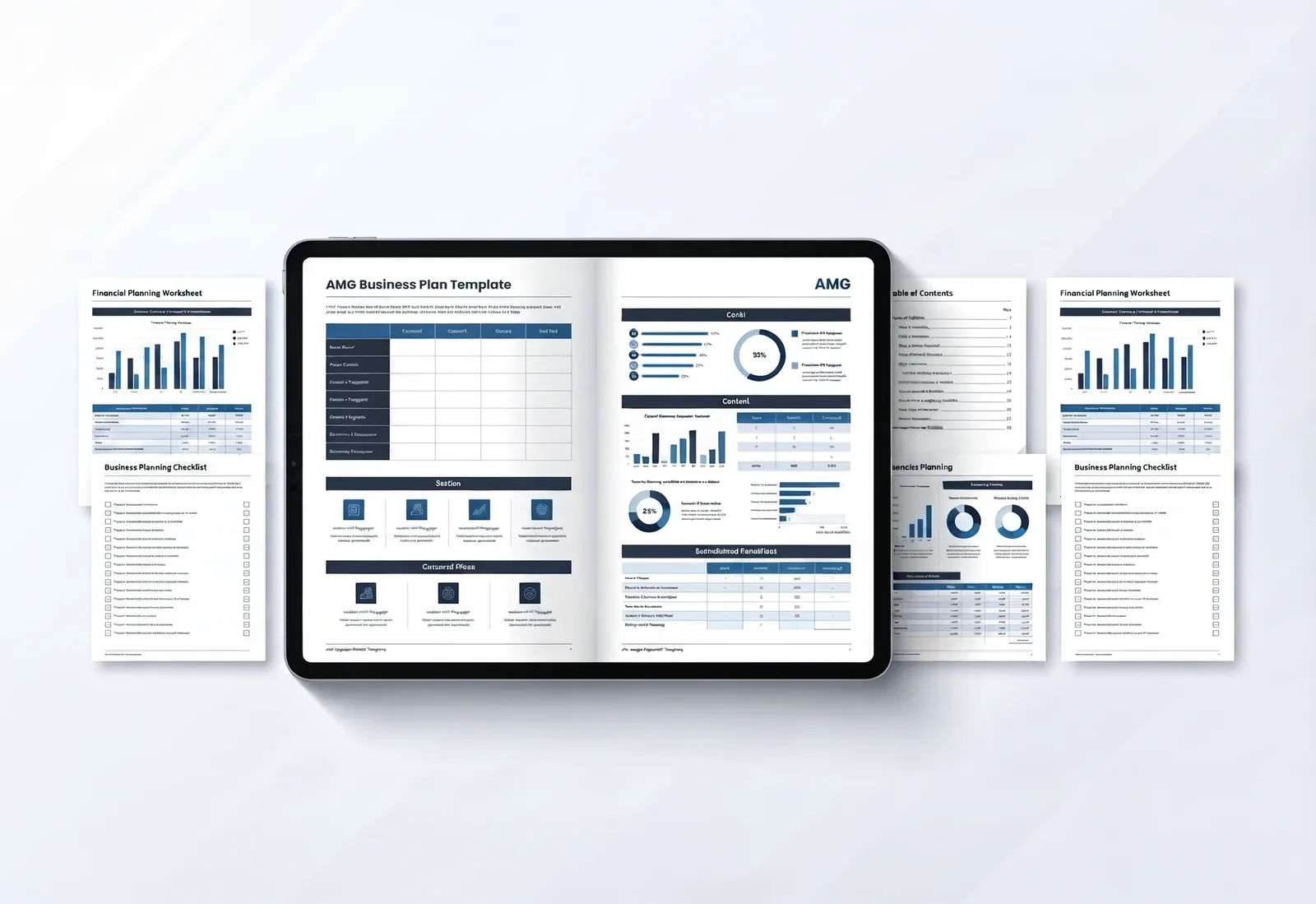
Download a complete business plan template covering the essential sections every startup, small business, or growing company should prepare.
- Executive summary and company description
- Market analysis, customer profile, and competitor review
- Products, services, marketing, sales, and operations plan
- Financial projections, funding request, risks, and milestones
- Final checklist and appendix for supporting documents
Business Plan Examples for Startups
The following examples show how the main parts of a business plan can be applied to real startup models. They are educational reconstructions based on publicly available company information, not copies of the companies' original business plans, private financial projections, or investor documents.
Startup Business Plan Example in Egypt: Swvl
Swvl is an Egypt-founded mobility technology company that began in Cairo with the goal of improving urban transportation. Its current business focuses on technology-enabled transport solutions for enterprises, educational institutions, governments, healthcare organizations, and other clients that need reliable and efficient mobility services.
Business problem: Companies, schools, universities, factories, and public organizations may struggle to manage employee or passenger transportation efficiently. Common challenges include unreliable schedules, inefficient routes, limited fleet visibility, high operating costs, and poor communication with passengers.
Proposed solution: A technology platform that helps organizations plan routes, manage vehicles, monitor trips, communicate with riders, and improve fleet utilization. The service can combine mobility software with managed transportation that includes vehicles, drivers, operational support, and real-time tracking.
Target customers: Businesses with large workforces, factories, call centers, schools, universities, municipalities, government organizations, healthcare facilities, and other institutions that regularly transport employees, students, or service users.
Value proposition: The service offers organizations a more structured way to manage transportation, reduce administrative work, improve route efficiency, monitor fleet performance, and provide riders with a safer and more dependable experience.
Revenue model: A business plan based on this model could generate revenue through contracted managed transportation services, access to fleet-management software, enterprise service agreements, and customized mobility solutions. The exact pricing structure would depend on factors such as fleet size, number of riders, routes, service level, and contract duration.
Marketing and sales strategy: The company could focus on direct business-to-business sales, product demonstrations, institutional partnerships, proposals for large organizations, and long-term contracts with clients that have recurring transportation needs.
Operations plan: The business would need route-planning technology, fleet and driver management, passenger applications, administrative dashboards, customer support, service monitoring, safety procedures, and reliable transport partners.
Key risks: Important risks could include transport regulations, service interruptions, vehicle availability, fuel and operating costs, driver performance, passenger safety, technology failures, and dependence on major enterprise contracts.
What startups can learn: Swvl demonstrates how an Egyptian startup can begin with a clear local problem and develop a technology-supported service for a wider institutional market. The business-plan lesson is to connect a visible customer problem with a scalable solution, measurable operational benefits, and a clear revenue model.
International Startup Business Plan Example: Airbnb
Airbnb developed a two-sided online marketplace that connects hosts offering accommodation with guests looking for places to stay. Although Airbnb is now a public company rather than an early-stage startup, its business model remains a useful example of how a platform business can connect supply and demand without owning most of the accommodation offered through the marketplace.
Business problem: Travelers need convenient ways to discover and book different types of accommodation, while property owners and hosts need an efficient way to promote available spaces, manage bookings, receive payments, and reach potential guests.
Proposed solution: A digital marketplace where hosts can create listings and manage availability, while guests can search, compare, book, pay for, and review stays through a website or mobile application.
Target customers: The platform serves two connected customer groups: hosts who provide accommodation and guests who book it. The business must attract and retain both groups because the value of the marketplace depends on having sufficient supply and demand.
Value proposition: Guests receive access to a broad selection of places to stay, while hosts receive tools for creating listings, managing availability, setting prices, communicating with guests, processing payments, and building a reputation through reviews.
Revenue model: Airbnb generates revenue primarily by charging service fees for facilitating bookings through its platform. The company acts as an intermediary rather than owning the properties listed by hosts.
Marketing and growth strategy: A marketplace business must attract both hosts and guests. Growth can be supported by brand marketing, search visibility, partnerships, referrals, localized marketing, repeat bookings, and improvements that make the platform easier and safer to use.
Operations plan: The platform requires secure payments, listing management, search and booking technology, customer support, fraud prevention, identity and listing checks, review systems, host tools, cancellation management, and processes for resolving disputes.
Key risks: Major risks include trust and safety incidents, fraudulent listings or bookings, changes in short-term rental regulations, tax obligations, competition, economic downturns, changes in travel demand, data security, and failure to maintain enough active hosts and guests.
What startups can learn: Airbnb shows how a startup can build a scalable marketplace by solving problems for two customer groups at the same time. The business-plan lesson is that a platform must explain how it will attract both sides of the market, build trust, process transactions, generate revenue, and manage regulatory and operational risks.
How to Prepare Financial Projections for a Business Plan
Financial projections show how your business may perform based on realistic assumptions about customers, pricing, sales, expenses, payment timing, and growth. They help you estimate how much money the business needs, when it may become profitable, and whether it can generate enough cash to continue operating.
The purpose is not to predict the future perfectly. A reliable forecast explains where each number comes from and shows how changes in sales, costs, or payment delays could affect the business.
Start With Clear Financial Assumptions
List the assumptions used in your calculations before preparing the forecast. These may include the expected number of customers, selling price, monthly sales volume, supplier costs, salaries, rent, marketing spending, customer payment periods, seasonal demand, and planned growth.
Support important assumptions with evidence such as supplier quotations, rental agreements, competitor pricing, customer research, previous sales data, staffing plans, or production capacity.
Calculate Startup Costs
Startup costs include the money required before opening and the working capital needed during the first months of operation. Common items include registration, licenses, rent deposits, equipment, inventory, technology, website development, marketing, professional fees, initial salaries, and emergency cash reserves.
Prepare a Sales Forecast
Estimate sales by identifying what you expect to sell, how many units or services you expect to provide, and the average selling price. Include the time needed to attract customers and consider seasonality, production limits, market demand, and the possibility that early sales may grow slowly.
Separate Fixed and Variable Costs
Fixed costs usually remain stable when sales change, such as rent, insurance, software subscriptions, and permanent salaries. Variable costs normally rise or fall with sales, such as materials, packaging, delivery charges, payment-processing fees, and sales commissions.
Create a Profit and Loss Forecast
A projected profit and loss statement estimates revenue, cost of sales, gross profit, operating expenses, and expected profit or loss. It helps you evaluate whether the planned pricing and sales volume can cover the cost of running the business.
Illustrative example: The figures below are provided only to demonstrate the structure of a forecast. They should not be used as financial advice or copied into a real business plan without supporting evidence.
| Forecast Item | Month 1 | Month 2 | Month 3 |
|---|---|---|---|
| Revenue | 150,000 EGP | 180,000 EGP | 210,000 EGP |
| Cost of sales | 60,000 EGP | 72,000 EGP | 84,000 EGP |
| Gross profit | 90,000 EGP | 108,000 EGP | 126,000 EGP |
| Operating expenses | 75,000 EGP | 75,000 EGP | 78,000 EGP |
| Operating profit | 15,000 EGP | 33,000 EGP | 48,000 EGP |
In this simplified example, operating profit is calculated by subtracting the cost of sales and operating expenses from revenue. A complete forecast may also need to include depreciation, interest, taxes, financing charges, and other costs that apply to the business.
Prepare a Cash Flow Forecast
Cash flow shows when money is expected to enter and leave the business. This is different from profit because a sale can be recorded before the customer pays, while rent, salaries, inventory, and supplier invoices may need to be paid earlier.
Your forecast should include the opening cash balance, expected customer payments, funding received, supplier payments, salaries, taxes, loan repayments, operating expenses, and the closing cash balance for each month.
Calculate the Break-Even Point
The break-even point is the sales level at which total revenue equals total costs. For a business selling individual units, a basic calculation divides fixed costs by the selling price per unit minus the variable cost per unit.
Break-even units = Fixed costs ÷ (Selling price per unit − Variable cost per unit)
This calculation helps you understand how many products, subscriptions, or service hours must be sold before the business begins generating profit.
Prepare Three Forecast Scenarios
Create a conservative scenario, a base scenario, and an optimistic scenario. Adjust assumptions such as sales volume, pricing, supplier costs, marketing results, and customer payment delays. This helps you understand how the business may perform under different conditions and how much working capital may be required.
Review Actual Results Against the Forecast
After the business begins operating, compare actual sales, expenses, profit, and cash flow with the forecast. Investigate significant differences and update the plan when prices, costs, customer demand, staffing, funding, or payment terms change.
Business Planning Considerations in Egypt
A business plan for a startup or growing company in Egypt should reflect the local legal, tax, operational, and financial environment. The plan should explain not only how the business will attract customers and generate revenue, but also how it will register, maintain financial records, meet its obligations, employ staff, and manage cash flow.
Requirements can vary according to the business activity, legal form, location, ownership, and number of employees. Before using the plan for registration, financing, or investment, confirm the current requirements with the relevant official authority and a qualified professional.
Choose the Appropriate Legal Structure
The legal structure affects ownership, management, liability, registration procedures, taxation, and future investment. Your plan should identify the intended structure and explain why it is suitable for the number of founders, the business activity, expected capital, and long-term goals.
The General Authority for Investment and Free Zones provides official information and electronic services related to company incorporation in Egypt.
Identify Licenses and Sector Approvals
Some activities may require permits, professional approvals, health and safety requirements, municipal approvals, or sector-specific licenses. The business plan should list the expected approvals, estimated fees, responsible authority, required documents, and the time needed before operations can begin.
Plan Tax Registration and Electronic Invoicing
Your financial and operations plan should consider tax registration, filing responsibilities, supporting documents, invoice procedures, and value-added tax where applicable. Businesses should also assess whether their activities are subject to electronic invoicing or electronic receipt requirements.
The Egyptian Tax Authority's electronic invoice guides provide official information about registration, system preparation, integration, electronic signatures, coding, and frequently asked questions.
Set Up Bookkeeping and Financial Controls
The plan should explain how the business will record sales, purchases, expenses, customer payments, supplier balances, payroll, taxes, inventory, and bank transactions. It should also identify who will maintain the records, which accounting system will be used, and how often management will review financial reports.
Clear approval procedures, document storage, bank reconciliation, invoice review, and separation of financial responsibilities can reduce errors and make the business easier to manage, finance, or audit.
Budget for Employees, Payroll, and Social Insurance
If the business will hire employees, the plan should include salaries, incentives, recruitment costs, training, payroll administration, social insurance, and other employment-related costs. These expenses should appear in both the operations plan and the financial projections.
The National Organization for Social Insurance provides official guidance for employers opening a new establishment subscription file.
Use Realistic Local Financial Assumptions
Financial projections should reflect the actual Egyptian market in which the business will operate. Estimate costs using recent supplier quotations, rental offers, salary expectations, delivery charges, utilities, financing costs, and realistic customer payment periods.
Where the business depends on imported equipment, materials, software, or foreign-currency payments, prepare more than one forecast scenario. This can show how changes in costs, exchange rates, customer demand, or payment delays may affect pricing, profit, and working-capital needs.
Plan Funding and Working Capital
The funding section should separate one-time startup costs from the money needed to operate during the first months. Explain how much funding is required, whether it will come from the founders, a bank, an investor, or another source, and how the funds will be used.
Working-capital planning is particularly important when customers pay after delivery but suppliers, employees, rent, and taxes must be paid earlier. A monthly cash flow forecast can help identify possible shortages before they interrupt operations.
Review the Plan Before Using It
Before presenting the plan to a bank, investor, or partner, confirm that the legal structure, tax assumptions, payroll costs, permits, financial projections, and funding request are consistent. A professional review can also help identify missing obligations, unrealistic assumptions, and cash flow risks before the business commits significant time or money.
Common Business Plan Mistakes to Avoid
A business plan should present a realistic and consistent view of how the business will operate, attract customers, manage costs, and generate revenue. Avoiding the following mistakes can make the plan more useful for management decisions and more credible when it is reviewed by banks, investors, or business partners.
Using Unrealistic Revenue Forecasts
High sales projections without clear evidence can reduce trust in the entire plan. Revenue estimates should be based on realistic customer numbers, pricing, market demand, production capacity, sales channels, and the time required to build awareness and attract customers.
Ignoring Cash Flow
A business can report a profit and still face cash shortages. The plan should show when customers are expected to pay and when salaries, suppliers, rent, taxes, loan repayments, and other expenses must be paid. This helps identify working-capital needs before they become operational problems.
Writing for Everyone Instead of a Clear Audience
A plan written for internal management may focus on actions, budgets, and performance targets. A plan for a bank or investor usually needs more evidence, financial detail, risk analysis, and a clear funding request. Decide who will read the plan and include the information that audience needs.
Weak Market Research
Statements such as “everyone needs this product” or “there are no competitors” are rarely convincing. Market analysis should define the target customer, explain the customer problem, review direct and indirect competitors, and use available evidence to support expected demand.
Failing to Explain the Competitive Advantage
A business plan should explain why customers will choose the business instead of another option. The advantage may relate to price, quality, location, convenience, customer service, specialization, technology, delivery speed, or a stronger understanding of a specific customer group.
Underestimating Costs
New businesses often focus on major expenses while overlooking registration fees, professional services, maintenance, insurance, delivery, software, marketing, taxes, staff training, payment-processing fees, and emergency reserves. Use recent quotations and include a reasonable contingency amount where appropriate.
Presenting Numbers That Do Not Match the Strategy
The financial projections should be consistent with the marketing, staffing, operations, and growth plans. For example, a forecast showing rapid sales growth should also include the marketing budget, employees, equipment, inventory, or operational capacity needed to support that growth.
Hiding Risks or Weaknesses
Every business has risks. Ignoring them can make the plan appear incomplete or unrealistic. Identify the most important financial, operational, market, regulatory, supplier, staffing, and technology risks, then explain how the business will reduce or respond to them.
Making the Plan Too Long or Difficult to Read
A detailed plan should still be clear and easy to review. Use descriptive headings, short paragraphs, relevant tables, and supporting documents in the appendix. Remove repeated information and avoid technical language that the intended reader may not understand.
Not Updating the Business Plan
Customer demand, prices, costs, regulations, competitors, and business goals can change. Review the plan regularly and update it when the business launches a new product, enters a new market, applies for funding, changes its pricing, or experiences major financial or operational changes.
Before sharing the plan, check that the strategy, market research, operations, funding request, and financial projections support each other. A consistent plan is more valuable than a long document filled with unsupported claims.
Final Business Plan Checklist
Before sharing or using your business plan, review every section to confirm that the information is clear, consistent, realistic, and supported by evidence. Use the checklist below to identify missing details and correct weak assumptions.
Business Idea and Strategy
- The business idea and purpose are explained clearly.
- The problem the business solves is specific and realistic.
- The value proposition explains why customers should choose the business.
- Short-term and long-term goals are measurable.
- The business model explains how the company will generate revenue.
Market and Customers
- The target customers are defined clearly.
- Customer needs and buying behavior are supported by research.
- The market size, demand, and relevant trends are explained.
- Direct and indirect competitors are identified.
- The competitive advantage is practical and believable.
Products, Marketing, and Operations
- The products or services are described in simple language.
- Pricing is connected to customer value, costs, and market conditions.
- Marketing and sales channels are clearly identified.
- The plan explains how customers will be acquired and retained.
- Daily operations, suppliers, equipment, technology, and staffing are covered.
- Management roles and responsibilities are assigned clearly.
Financial Plan
- Startup costs are complete and based on recent information.
- Sales forecasts are supported by clear assumptions.
- Fixed and variable costs are included.
- Profit and loss projections are internally consistent.
- Monthly cash flow shows when money will enter and leave the business.
- The break-even point has been estimated.
- Conservative, base, and optimistic scenarios have been considered.
- Taxes, financing costs, and other applicable expenses are included.
Funding, Risks, and Compliance
- The amount of funding required is stated clearly.
- The use of funds is explained in detail.
- Repayment expectations or investor returns are addressed where relevant.
- Major market, financial, operational, regulatory, and staffing risks are identified.
- Each major risk has a practical response or mitigation plan.
- Legal, licensing, tax, payroll, invoicing, and compliance requirements have been reviewed.
Final Review
- The executive summary reflects the completed business plan.
- The strategy, operations, marketing, and financial figures support each other.
- Unsupported claims and unrealistic assumptions have been removed.
- Repeated information has been reduced.
- Grammar, spelling, headings, and financial calculations have been checked.
- Supporting documents are included in the appendix.
- The plan has been reviewed by the appropriate professional before being submitted to a bank, investor, or partner.
A business plan is ready to use when another person can understand the opportunity, strategy, risks, financial needs, and next steps without relying on additional explanations from the founder.
When to Get Professional Business Plan Support
Many founders can prepare an initial business plan independently, especially when the document is used to organize an early-stage idea. Professional support becomes more valuable when the plan will influence funding, investment, taxation, legal obligations, expansion, or other important financial decisions.
An experienced advisor should not replace the founder's knowledge of the business. Instead, professional review can help test assumptions, identify missing information, improve financial accuracy, and present the plan in a format that banks, investors, and business partners can understand.
You Are Applying for a Business Loan
A lender may review the purpose of the financing, projected cash flow, repayment ability, existing obligations, business risks, and the owner's contribution. Professional support can help ensure that the funding request agrees with the financial projections and clearly explains how the money will be used.
You Are Preparing for Investors
Investors usually want to understand the market opportunity, business model, competitive advantage, management team, expected growth, funding needs, and major risks. A professional review can help improve the consistency between the strategy, valuation assumptions, use of funds, and projected financial results.
The Financial Projections Are Complex
Professional assistance may be appropriate when the plan includes multiple products, several locations, imported materials, foreign-currency payments, loans, investor funding, seasonal revenue, long customer payment periods, or significant equipment purchases. These factors can affect profit, working capital, cash flow, and the amount of financing required.
You Are Starting a Business in a Regulated Industry
Businesses operating in regulated sectors may need licenses, approvals, technical requirements, insurance, recordkeeping procedures, or sector-specific compliance. Professional guidance can help identify obligations that may affect the launch schedule, operating costs, staffing, or financial forecasts.
You Are Expanding an Existing Business
Expansion can involve opening a new branch, entering another market, hiring additional employees, purchasing equipment, increasing inventory, or launching a new service. A professional review can assess whether the existing business can support the expansion and whether additional funding or working capital will be needed.
You Need an Independent Review
Founders can become closely attached to their ideas and may overlook weak assumptions or operational risks. An independent review can challenge the sales forecast, pricing strategy, cost estimates, customer acquisition plan, funding request, and risk assessment before the plan is shared with external parties.
What Professional Support Should Cover
- Reviewing the business model and commercial assumptions.
- Checking startup costs, pricing, revenue forecasts, and operating expenses.
- Preparing or reviewing profit, cash flow, and break-even projections.
- Assessing funding requirements and the proposed use of funds.
- Identifying tax, bookkeeping, payroll, licensing, and compliance considerations.
- Improving the clarity and consistency of the final document.
Professional support does not guarantee that a bank will approve financing or that an investor will provide capital. Its purpose is to help create a more complete, realistic, and decision-ready plan based on the information available.
Before choosing an advisor, confirm that the person or firm has relevant experience, understands your industry and market, explains assumptions clearly, and does not make unsupported promises about funding or business success.
Frequently Asked Questions About Business Plans
What is a business plan?
A business plan is a written document that explains the business idea, target customers, products or services, market opportunity, operations, management structure, financial projections, and funding needs. It serves as a roadmap for launching, managing, and growing the business.
How do you write a business plan step by step?
Start by defining the purpose of the plan and describing the business idea. Research the market, identify target customers, analyze competitors, explain the products or services, prepare the marketing and operations plans, create financial projections, clarify funding needs, and write the executive summary last.
What should a business plan include?
A complete business plan normally includes an executive summary, company description, market analysis, customer profile, competitor review, products or services, marketing and sales strategy, operations plan, management team, financial projections, funding request, risk assessment, and appendix.
How long should a business plan be?
The appropriate length depends on the purpose and complexity of the business. A lean internal plan may be only a few pages, while a traditional plan prepared for a bank, investor, or partner may require considerably more detail. The goal is to include the information the intended reader needs without unnecessary repetition.
What is the difference between a traditional and lean business plan?
A traditional business plan provides detailed information about the company, market, operations, management, financial projections, and funding needs. A lean business plan is shorter and focuses on the main problem, solution, customers, revenue model, costs, activities, risks, and next actions.
Can I write a business plan myself?
Yes. Founders can prepare an initial plan using reliable research and a clear template. Professional review may be useful when the plan includes complex financial projections, loan applications, investor funding, tax considerations, regulated activities, or major expansion decisions.
Do I need a business plan to get a loan?
Many lenders request a business plan or similar financial information before evaluating an application. They may review the purpose of the financing, expected revenue, cash flow, existing obligations, repayment ability, owner contribution, and business risks. Requirements vary by lender and financing product.
What financial information should a business plan include?
The financial section should normally include startup costs, sales forecasts, cost of sales, operating expenses, profit and loss projections, cash flow forecasts, break-even analysis, funding requirements, and the assumptions used to calculate each figure.
How many years should financial projections cover?
Many plans include monthly projections for the first year and annual projections for the following years. The appropriate period depends on the purpose of the plan, business model, funding request, and requirements of the bank or investor reviewing it.
How often should a business plan be updated?
Review the plan regularly and update it when important assumptions change. This may include new pricing, increased costs, changes in customer demand, new competitors, additional funding, expansion, new products, staffing changes, or major differences between actual and forecast results.
Is a business plan important for startups in Egypt?
Yes. A plan can help an Egyptian startup estimate costs, organize funding, prepare bookkeeping and payroll processes, consider registration and licensing requirements, manage cash flow, and explain the business model to banks, investors, or partners.
